AI Liquidity Management: Fees, Inventory and Rebalance Costs
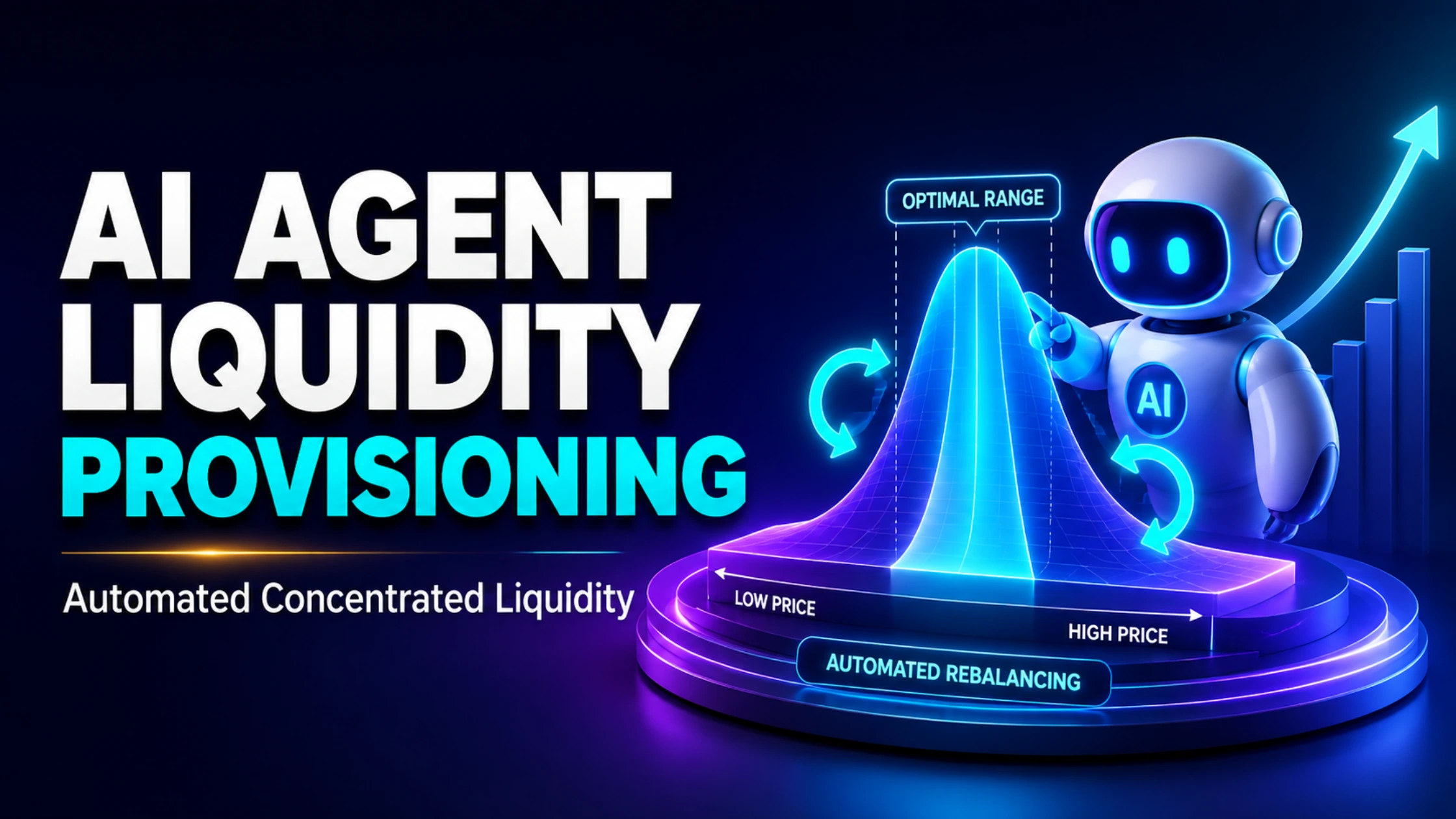
Uniswap v3 and v4 let LPs allocate liquidity within price ranges. A position outside its range stops earning swap fees until it becomes active again and may consist entirely of one asset. Uniswap concentrated-liquidity documentation
Capital efficiency does not establish net profit. The asset mix, price path, fees, transaction costs and chosen comparison all matter. Calling a manager an AI agent does not demonstrate that it predicts trends or reduces losses.
Evidence correction, 13 November 2026: The former percentage reductions, numerical ratings and annual-return simulator are withdrawn. The page does not supply the observations or executable methodology needed to substantiate them.
What an LP Comparison Needs
| Record | Purpose |
|---|---|
| Initial asset amounts, prices and ranges | Define the starting position and comparison |
| Deposits, withdrawals and inventory | Separate capital movements from returns |
| Fees and other distributions | Record amounts actually accrued or received |
| Rebalance transactions and costs | Explain changes and avoid double counting |
Describe the Manager Before Measuring It
Record the implemented decision rule, its inputs and the authority to change a position. A fixed rule, a statistical model and an LLM-assisted workflow are different designs. Neither the presence of a model nor a secure execution environment establishes profitable decisions.
Compare the same assets, starting capital, dates and cash flows. Preserve a passive comparison explicitly, rather than treating every fee earned as evidence that active management added value.
Keep Inventory Value and Costs Separate
The former two-variable formula is withdrawn because the page did not establish the entry-price/range assumptions or its valid branches. A concentrated-liquidity comparison needs the exact position and a stated holding benchmark.
For a realized record, reconcile ending inventory value, distributions and external cash flows at consistent valuations, then subtract only additional costs not already included. If a calculation already reflects the asset-value effect of rebalancing, do not deduct the same effect again under a loss label. Expected fees are a forecast, not an observed return.
Uniswap v4 Hooks & Custom Fee Tier Adaptation
Uniswap v4 supports dynamic-fee pools whose dynamic capability is set at creation. Fees can be updated through PoolManager or a beforeSwap hook. Those mechanisms do not establish that a particular implementation uses AI or produces better returns. Uniswap dynamic-fee documentation
Strategic Infrastructure & Platform Recommendations
Existing software and venue references are retained below. Verify support for the exact chain, pool and task; this page has not demonstrated their liquidity-management performance or a complete integration.
- Liquidity Hedging & Spot Platforms: Hedge LP inventory exposure or trade systemic pool assets across major exchanges including Bybit (Referral Code: 46164), OKX (Referral Code: 2136301), or MEXC (Code: mexc-16yJL).
- Intent-Based Swaps & Liquidity Routing: Execute low-slippage inventory rebalancing swaps via private relays using CoW Swap (Ref Code: DECENTRALISED) or OKX Web3 Router (Ref Code: DECENTRALISED).
- Automated Workflow Orchestration: Automate yield reporting, range alert notifications, and vault analytics pipelines using Make.com or project task tracking on Taskade.
- Automated Strategy Builders: For retail traders deploying automated strategy rules without writing custom code, utilize 3Commas (Code: tc475383), Coinrule, or Cryptohopper.
- Cold Storage Key Security: Isolate core protocol revenues, LP earnings, and reserve collateral using hardware security from Ledger, OneKey (Code: 46Z9TD), or CoolWallet Pro.
- On-Chain Tax & Yield Accounting: Track dynamic LP reward distributions, gas deductions, and taxable events accurately with Koinly or CoinLedger.
Comparison Evidence Record
The prior simulator is withdrawn because its fixed fee-yield, loss-drag and AI-uplift assumptions did not establish observed annual returns or outperformance. No replacement performance forecast is presented.
Record the pool and position identifiers, strategy version, observation period, deposits and withdrawals, inventory valuations, fees, rebalance receipts and cost treatment before comparing outcomes. Unknown values remain unknown.
Frequently Asked Questions
Does an AI agent necessarily reduce impermanent loss?
No. A model label does not demonstrate a better realized outcome. Compare the actual decisions and full cash-flow-adjusted results with a defined alternative.
How should rebalancing costs be evaluated?
Record the actual transactions and costs, then compare like-for-like outcomes. Frequent activity alone does not establish profitability or loss, and omitted fees can distort a comparison.
Does a dynamic-fee hook prove AI performance?
No. A configurable fee mechanism and an observed improvement are different claims. The implementation, observation period and complete results still need review.
About the Author