The Signal
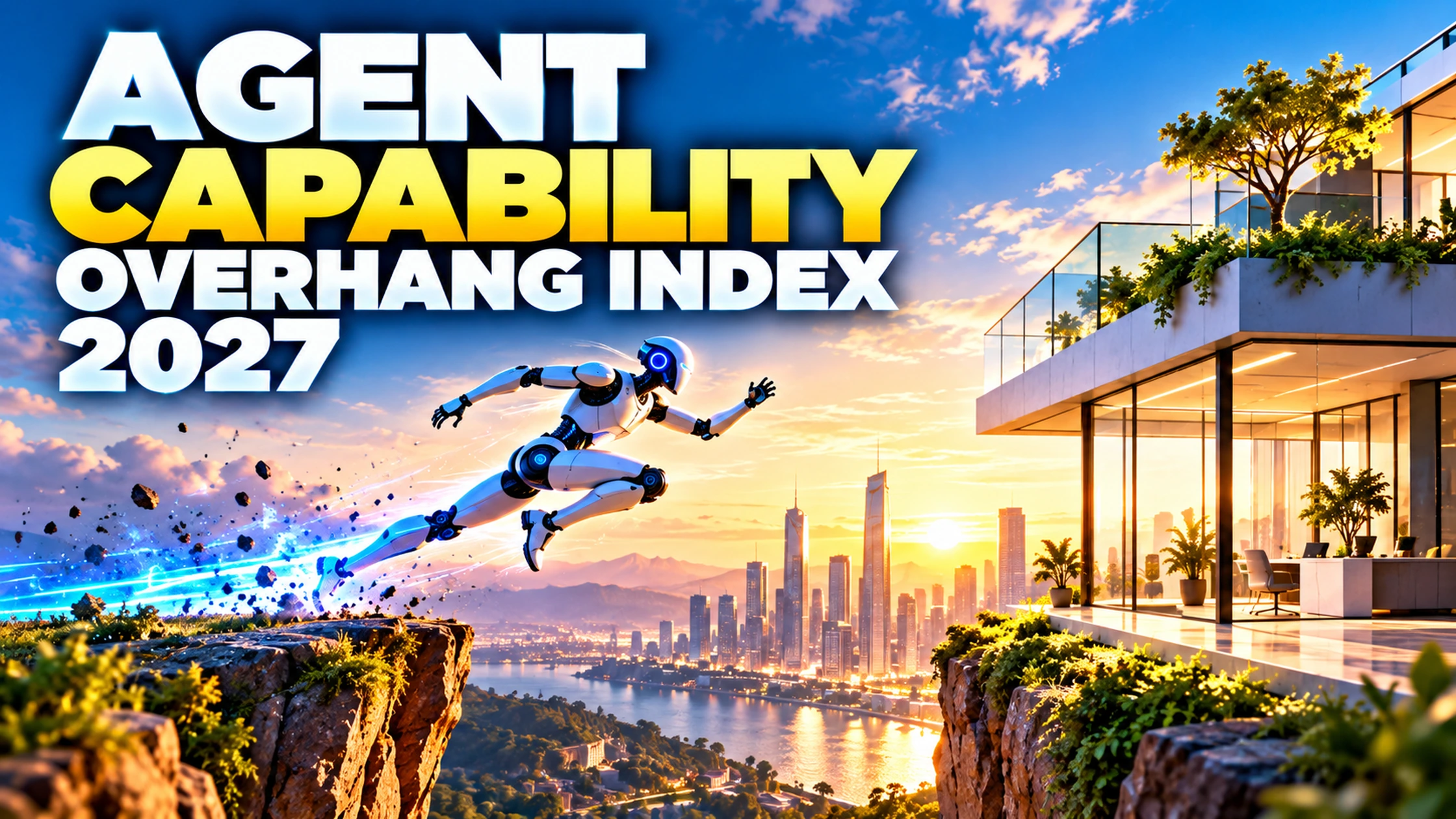
The biggest enterprise AI risk may not be that agents are too weak. It may be that agent capability is improving faster than organizations can redesign workflows, permissions, controls and accountability around it. DN calls that gap the Agent Capability Overhang: the distance between what agents can technically do and what a business is prepared to deploy safely.
The capability overhang in one equation
Capability Overhang = Agent Capability Score − Deployment Readiness Score.
A positive gap means the technology can do more than the organization is prepared to govern. A negative gap means the organization has more process discipline than the agent can reliably exploit. The ideal state is not zero at all times, but a small, understood gap with explicit controls.
The six capability dimensions
| Dimension | What agents can now do | What organizations must be ready to manage |
|---|---|---|
| Reasoning | Plan, compare, synthesize and adapt. | Acceptance criteria and review thresholds. |
| Tool use | Call APIs, browse systems and update records. | Permissions, allowlists and audit logs. |
| Memory | Retain context across tasks and users. | Privacy, deletion, poisoning and scope controls. |
| Transactions | Prepare or execute purchases and payments. | Limits, approval gates and reconciliation. |
| Autonomy | Run multi-step workflows with limited prompting. | Escalation, observability and exception handling. |
| Scale | Replicate work across thousands of tasks. | Monitoring, incident response and cost controls. |
DN Capability vs Readiness Calculator
Why capability is outrunning governance
Agents improve through model upgrades, tool access and better orchestration. Organizational readiness moves more slowly because it depends on policy, process redesign, legal review, security, training and cultural change.
That creates a structural mismatch. A model upgrade can arrive overnight. A mature approval architecture can take months.
Where the overhang is highest
| Function | Capability today | Typical readiness | Overhang risk |
|---|---|---|---|
| Customer support | High | Medium | Moderate |
| Software engineering | High | Medium-high | Moderate |
| Finance operations | Medium-high | Medium | High if write access is broad |
| Procurement | Medium-high | Low-medium | High |
| Legal / compliance | Medium | Medium | High consequence, even with smaller gap |
| Payments | Medium-high | Low-medium | Very high without hard limits |
A small gap can still be dangerous
Overhang is not only about size. A ten-point gap in a low-risk drafting workflow may be acceptable. A ten-point gap in payments, identity, employment or healthcare can be unacceptable because the consequence of failure is much higher.
Organizations therefore need both a gap score and a consequence score.
How to close the overhang
- Bound the workflow. Start with a narrow task and explicit success criteria.
- Reduce permissions. Give the agent the minimum authority required.
- Add observability. Log decisions, tools, failures and cost.
- Define escalation. Specify what stops automation and who takes over.
- Test exceptions. Use bad inputs, unavailable tools, ambiguous states and policy conflicts.
- Re-score after model upgrades. Capability can jump without readiness changing.
Methodology and limitations
Version 1.0, 28 October 2026. DN combines current enterprise-agent adoption evidence with a six-control readiness framework. Readiness is calculated from process maturity, permissions, observability, human escalation and incident preparedness.
Limitations: the score is directional. It does not replace security reviews, model evaluations, sector regulation or workflow-specific risk assessment.
Commercial disclosure: no vendor paid for inclusion or weighting.
Primary sources
- Deloitte, Agentic AI enterprise adoption research 2026
- McKinsey, State of AI 2026
- Microsoft, 2026 Work Trend Index
FAQ
What is agent capability overhang?
The gap between what an AI agent can technically do and what an organization is prepared to deploy safely and govern reliably.
Is a larger overhang always bad?
No. It can represent unused opportunity, but it becomes dangerous when high-capability agents receive more authority than the organization can monitor or control.
How do you reduce agent capability overhang?
Improve process maturity, permissions, observability, escalation paths and incident readiness before expanding autonomy.
When should an organization slow down deployment?
When agent capability materially exceeds controls in a workflow where errors can affect money, identity, rights, safety or regulatory obligations.
About the Author