Money Stories · Original fiction · 10 minute read
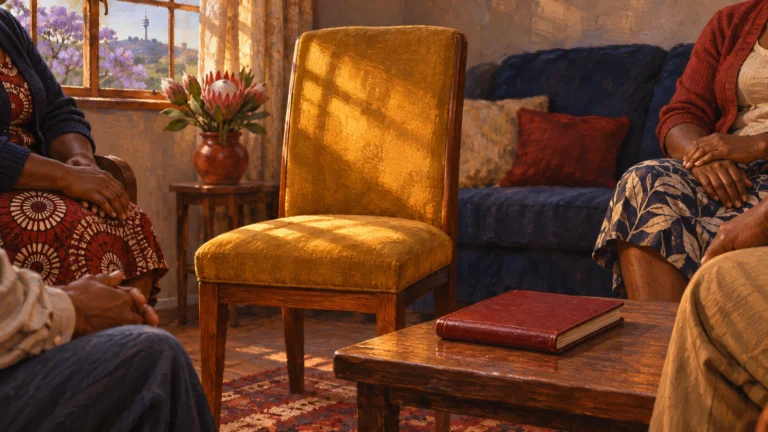
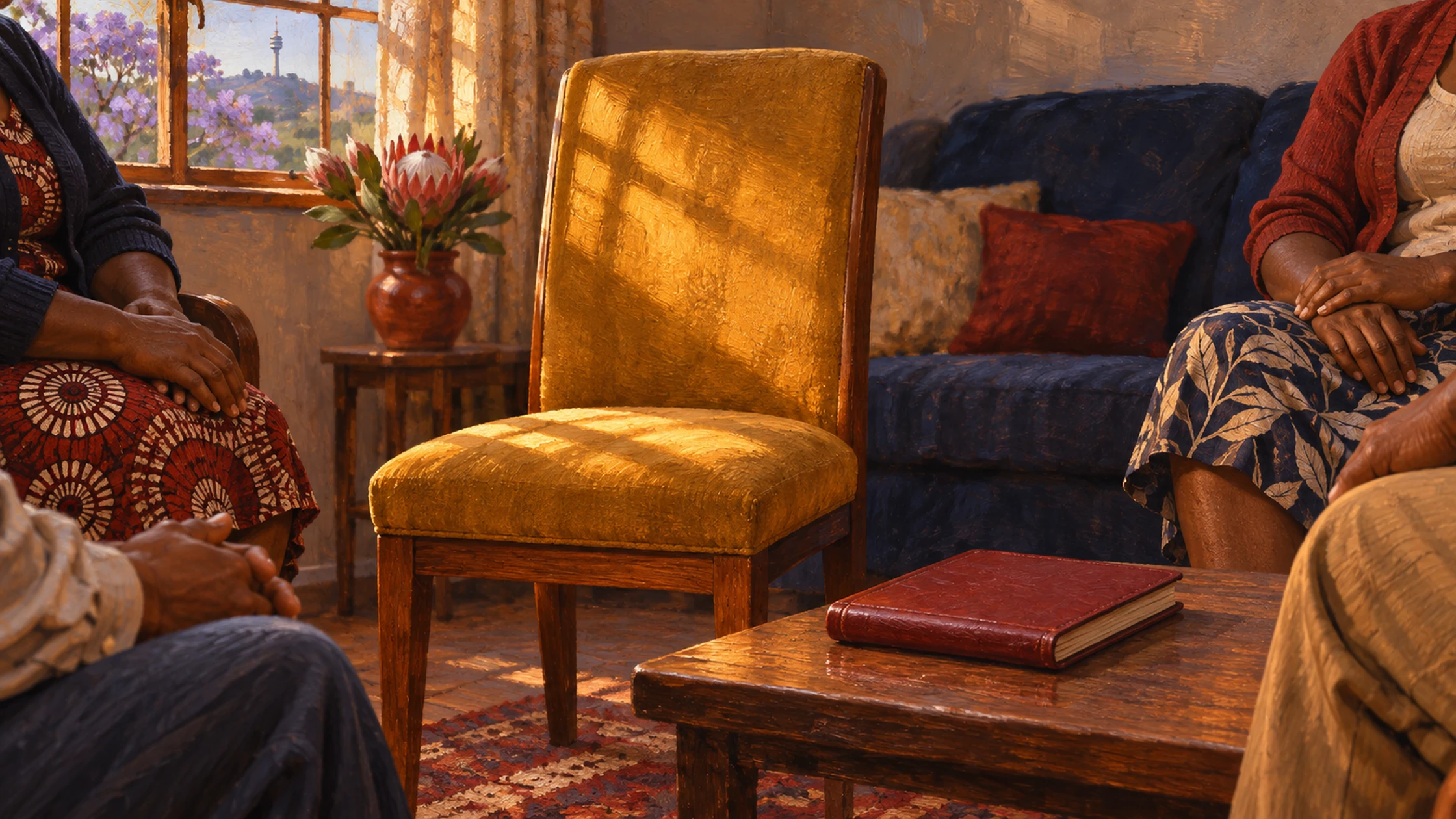
Rethabile’s chair had the best back. The others were straight plastic, borrowed from Busi’s church and returned each month with crumbs in their seams. This one was mustard yellow, with a little give when you leaned. Nobody sat in it, although Rethabile was late and Kabelo kept pressing a fist into his lower spine.
Naledi put her bag underneath it. She had come from the printing shop with blue ink on the side of her hand, and already there was a small blue thumbprint beside Rethabile’s name in the attendance book.
Seven present. One apology, sent that afternoon from the warehouse where Rethabile packed orders. Her shift had been extended. She was sorry; she knew it was her turn.
They were eight members, contributing R500 each month for eight months. One person received the R4,000 pot each round, in an order agreed before they began. This was the fourth round. Taking your turn did not excuse you from paying into the remaining ones.
All eight payments were there. Naledi had checked the bank statement against her little spreadsheet before the meeting. She could make each green square account for a real deposit. She could do this part well.
The other balance was R96, money they had already set aside for administration. Tonight’s payout would cost R6 from that balance. The R4,000 belonged to the round, whole and accounted for.
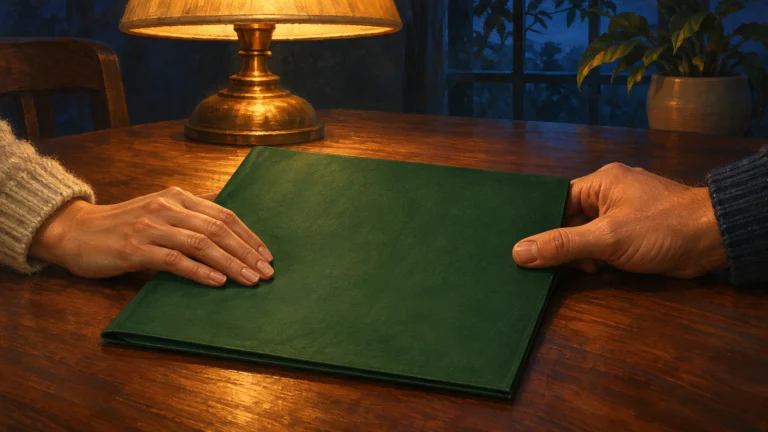
Then Naledi opened the second message Rethabile had sent that afternoon. At the shop she had seen the words new bank details on her screen and put it aside until she had the ledger in front of her.
Rethabile had changed banks. Please use these new details. She needed to pay for the sewing machine before the shop stopped taking Saturday delivery bookings at half past six.
Naledi read the message twice. She rang Rethabile. It rang out.
“Try again,” Mpho said.
She did. Beside her, Dineo was turning her phone face down and face up, as though one position might improve what was inside it.
The money on the table
Their own constitution required written confirmation of a changed payout account and a check with the member through an independently known contact route. Two people had to authorise the payment. Naledi and Mpho were responsible this month. If the change could not be confirmed, the payment waited.
Naledi had printed that constitution at work. She remembered the first copies coming out crooked. They had laughed about a savings club whose rules could not stand straight on a page.
“We know it’s her,” Tshidi said. “She told us about the machine.”
Naledi knew. She had gone with Rethabile to inspect it. Rethabile had put her foot on the pedal, cautiously at first, then with a confidence Naledi had not seen in her for months. Neither of them knew whether she would get enough sewing work. They had stood there listening anyway.
“I need to speak to her.”
“You need the form to speak to her,” Tshidi said.
Nobody laughed, which was worse.
Dineo’s phone rang. She took the call beside the window, within reach of the others’ knees. The room was too small to go privately anywhere without leaving it.
“Nine hundred altogether?” she said. “With the part? And coming out?”
She listened. Her free hand held the curtain away from her cheek.
Her fridge had stopped cooling that morning. The repairer she had used before could come tonight, fit the part and test it, for R900 including the visit. He needed to know she could pay when he finished. After tonight he was away until Monday.
“I get paid next Friday,” she told the curtain.
She ended the call. Busi offered freezer space. Dineo said thank you, but she had already distributed two bags of food among neighbours. There were limits to how much of your kitchen you could ask other people to keep.
Lerato looked towards Naledi’s phone.
“Let her have nine hundred until Friday. Rethabile isn’t here.”
The suggestion came so simply that Naledi almost began calculating it. Four thousand less nine hundred. Three thousand one hundred. A hole you could give a date to.
“Rethabile needs all of it.”
“She’s not answering.”
“That doesn’t make it available.”
The sharpness of her own voice embarrassed her. Dineo had not asked for the pot. She was studying a loose thread on the curtain, letting other people discuss how desperate she might be.
Naledi put her phone down.
“I’m sorry,” she said to Dineo.
“For which bit?”
Outside, somebody was trying to reverse a car through the gate. Each warning beep made the silence in the room seem deliberate.
The voice they knew
Busi remembered that Rethabile’s sister sometimes collected her from work. Her number was in the contact register, put there by Rethabile at the beginning of the round. Busi called it and asked her to pass on a request to get in touch. She did not discuss the money.
Meanwhile Mpho opened the constitution. He did not wave it. He laid it flat between the cups and found the paragraph they needed.
“We agreed this.”
“We also agreed to help each other,” Lerato said.
Naledi wanted Mpho to answer. He was good at being chairman when the work involved welcoming people. Now he looked as tired as she felt.
Half past six came and went.
Rethabile’s sister sent word that they were home. Mpho called her back on the number already in the register, and she passed the phone to Rethabile. Her own battery had died before her shift ended. Yes, she had sent the message. Yes, it was her new account. The old one had been closed.
There was no stranger behind the request. Rethabile was exactly where she said she had been, wanting exactly what she had asked for.
“I thought I’d made it easier,” she said. “I sent it before you started.”
She supplied the written change and the bank confirmation their agreement required. Naledi and Mpho checked the details together, including the account holder’s name, and recorded how they had confirmed the instruction. The room waited through each small action.
“All four thousand?” Rethabile asked.
“All four.”
Naledi kept her eyes on the screen. She could feel Dineo beside the window.
The two authorised the transfer. The debit and R6 charge appeared in the club’s account; the administration balance was now R90. A little later Rethabile confirmed receipt of R4,000. Naledi entered the payment reference against her name.
Rethabile had meanwhile called the machine shop. The machine was still reserved for her, but Saturday’s delivery list had closed. The next slot was Wednesday. Someone would have to be at her house.
“I could have arranged that yesterday,” she said. “Now I have to start asking.”
Naledi did not tell her that they had protected her money. She knew what the delay had cost in phone calls and favours, even without a rand amount beside it.
“I should have called you as soon as I saw the change,” she said. “Before the meeting.”
“Yes.”
That was all Rethabile gave her.
A different envelope
Mpho began to close the book. Dineo picked up her bag.
“Wait,” Naledi said.
She had R500 in her purse, folded inside a scrap of blue fabric. She was going to buy curtains on Saturday. For six months her sitting-room window had worn a sheet, and she was tired of waking in a room that looked as if somebody had just moved out.
Her rent, transport and household money were already covered separately. She could leave the curtain money out of reach for a while. She did not like the prospect. She checked this dislike, as carefully as she had checked the figures.
“I can lend you five hundred. Mine.”
Dineo’s face changed, then changed back.
“You said no.”
“To taking it from Rethabile’s turn.”
“I heard you.”
Naledi unfolded the notes but kept them in her hand.
Busi said she had R400 of her own available, beyond what she needed for the household. She could lend that. She did not ask anyone else to contribute. Kabelo had looked down at his shoes when Naledi made the first offer, and Naledi was grateful nobody made him look up.
Dineo sat. They agreed two personal loans, R500 from Naledi and R400 from Busi, both without interest or fees, both due next Friday, nine days away. Dineo expected her wages then. The expectation was not money already received.
“If something happens,” Busi said, “call me before Friday. We’ll have to talk again.”
Naledi wanted to say the same thing without making it sound like a threat. Instead she asked Dineo whether those terms were what she understood and wanted. Dineo said yes, with a small impatient movement that restored something familiar to her face.
They wrote the two agreements on separate sheets and each kept a copy. The club was not the lender and would not collect the debts. None of the other members was being asked to guarantee them.
The R900 went into an envelope. Naledi’s blue fabric went back into her purse by itself.
Dineo called the repairer. He would meet her at home after the meeting. Payment would follow the repair and test; for now the cash stayed with her. Naledi could not know whether next Friday would be straightforward. She could not write that part in advance.
Before they left
Rethabile was still available on her sister’s phone. Busi put the call on the table while they discussed next month. Everyone was tired enough to speak plainly.
“Tell people before collection day if you’re going to need new details,” Mpho said.
“Tell people you’re holding their payment,” Rethabile said. “Don’t just leave them calling a shop.”
Under their constitution, a change could be made with all eight members’ agreement recorded in the minutes, including a member joining by phone. Naledi wrote out the new paragraph and read it twice. They would seek confirmation of account changes before the meeting where possible, tell the recipient promptly about any hold, and keep current alternative contacts. A last-minute change would still need checking. All eight agreed.
“And emergencies?” Lerato asked.
They recorded that those requests would be considered separately from the rotating payout. Any personal help had to be voluntary. Nobody had to explain an empty purse to the room.
Naledi looked towards Dineo. Dineo was reading her own copy of the loan agreement. The club minutes contained no amount she owed, no promise on her behalf.
Kabelo finally sat in the mustard chair. He leaned back, closed his eyes and let out a long sigh.
“Now you tell us it’s comfortable,” Tshidi said to him.
It was almost a joke. Enough that they could begin picking up cups.
Rethabile asked Busi to save her a bread roll. Busi said she already had. Naledi waited for something more between herself and the voice on the phone, but there was only the small exchange of goodbyes.
She closed the ledger. All eight contributions, the payout and the charge were entered. The room remained untidy: plates, crumbs, two damp circles on the table.
Dineo stood with the envelope held against her bag. Naledi thought she was going to leave. Instead she took the far end of the table, waited for Naledi to take the other, and together they lifted it back against the wall.
Money behind the story
This fictional circle has eight members paying R500 in each of eight monthly rounds. Each round produces R4,000 for one member; recipients keep contributing afterwards. Receiving R4,000 is not an investment profit. A separate R96 administration reserve pays the illustrative R6 transfer charge, leaving R90. None of that reserve funds the emergency loans.
NASASA’s constitution template offers a framework for members to define contributions, benefits, records, banking authority and amendments. The story’s exact rules are invented agreements, not statutory requirements for every South African savings group. SABRIC’s safety guidance recommends making direct contact to verify a money request purportedly from someone you know. Verification can reduce risk; familiar names or payment records alone do not establish a new instruction. Here, the changed request is genuine.
Naledi’s R500 and Busi’s R400 are separate voluntary personal loans from available funds, totalling R900. Cash is handed over without interest or fees; repayment is due in nine days but remains outstanding when the story ends. The club neither lends nor guarantees this money. These facts illustrate separate responsibilities, not a legal assessment of loan enforceability or a promise of protection for pooled savings.
Sources checked 26 November 2026. All amounts, charges and arrangements are illustrative.
Financial sources checked 26 November 2026. Story figures and outcomes are illustrative. General financial education, not individual financial advice.
Stay with the story: three questions
- Which parts of this evening belong to the group’s shared obligations, and which require each friend’s separate consent?
- What would you want your savings circle to agree before a payout instruction changes at the last moment?
- What would you need to know about your own available money before offering a personal loan to a friend?
About the Author