DMEX is a decentralized perpetual futures exchange focused on capital efficiency, modular risk management, and sustainable liquidity design. This in-depth 2026 review explores DMEX’s architecture, products, margin system, fees, execution model, liquidity framework, and how it compares to other leading perp DEXs.
Where DMEX Fits in the Perp DEX Landscape
By 2026, decentralized derivatives are no longer experimental.
The market has clearly segmented into:
- Ultra-high-speed venues
- Privacy-focused execution layers
- Permissionless market factories
- Capital-efficient, risk-disciplined platforms
DMEX firmly belongs to the fourth category.
It is not chasing headline volume or meme-driven speculation. Instead, DMEX focuses on robust margin design, measured leverage, and modular risk controls that make perpetual trading sustainable over long horizons.
This review examines DMEX in depth — how it works, why its architecture matters, and which traders it is actually built for.
What Is DMEX?
DMEX is a decentralized perpetual futures exchange designed with a strong emphasis on:
- Capital efficiency
- Risk isolation
- Modular market design
- Long-term protocol stability
Rather than adopting extreme leverage or aggressive incentive programs, DMEX prioritizes predictability and resilience.
The platform enables users to trade perpetual contracts on crypto assets while maintaining clear liquidation boundariesand transparent risk parameters.
DMEX Core Design Philosophy
DMEX is built around three guiding principles:
1. Sustainable Perpetual Trading
DMEX avoids design choices that inflate short-term volume at the cost of long-term solvency.
2. Capital Efficiency Without Excessive Leverage
Efficiency comes from smart margin usage and pricing discipline — not reckless leverage caps.
3. Modular Architecture
Markets, risk parameters, and liquidity mechanisms can evolve independently without destabilizing the entire system.
Architecture and Execution Model
Modular Smart Contract Design
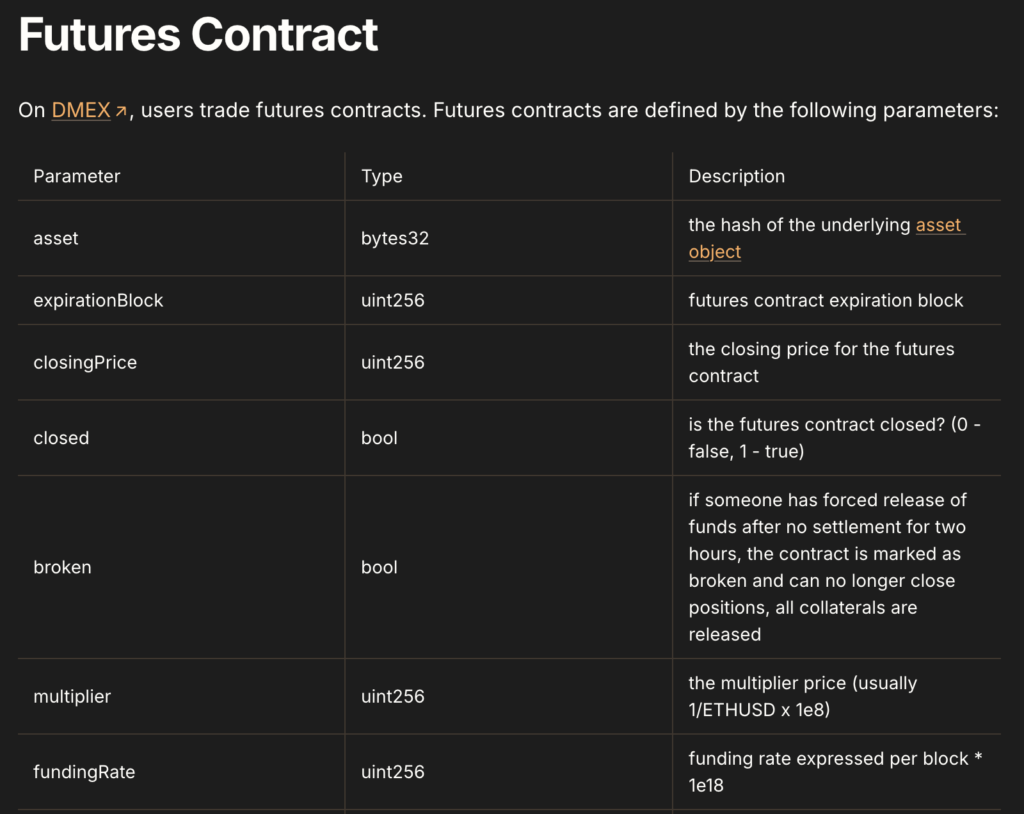
DMEX’s protocol architecture is intentionally modular, separating:
- Trade execution
- Margin accounting
- Liquidation logic
- Oracle pricing
- Risk parameterization
This separation reduces systemic risk and makes upgrades more manageable.
Execution and Pricing
DMEX executes trades using a controlled pricing model that references reliable price feeds rather than pure pool-based discovery.
This allows:
- Predictable fills
- Reduced price manipulation
- Stable execution during volatile conditions
Unlike AMM-heavy systems, DMEX minimizes the chance that a single trade materially shifts prices.
Products Offered on DMEX
1. Perpetual Futures
DMEX’s primary product is perpetual futures.
Key characteristics:
- No expiration
- Continuous funding or borrow cost mechanism
- Stablecoin-collateralized positions
Markets focus on liquid crypto assets to ensure reliable pricing and manageable risk.
2. Long and Short Exposure
Users can:
- Go long to gain upside exposure
- Go short to hedge or speculate on downside
Position sizing is constrained by risk parameters that adapt to market conditions.
Margin System and Risk Management
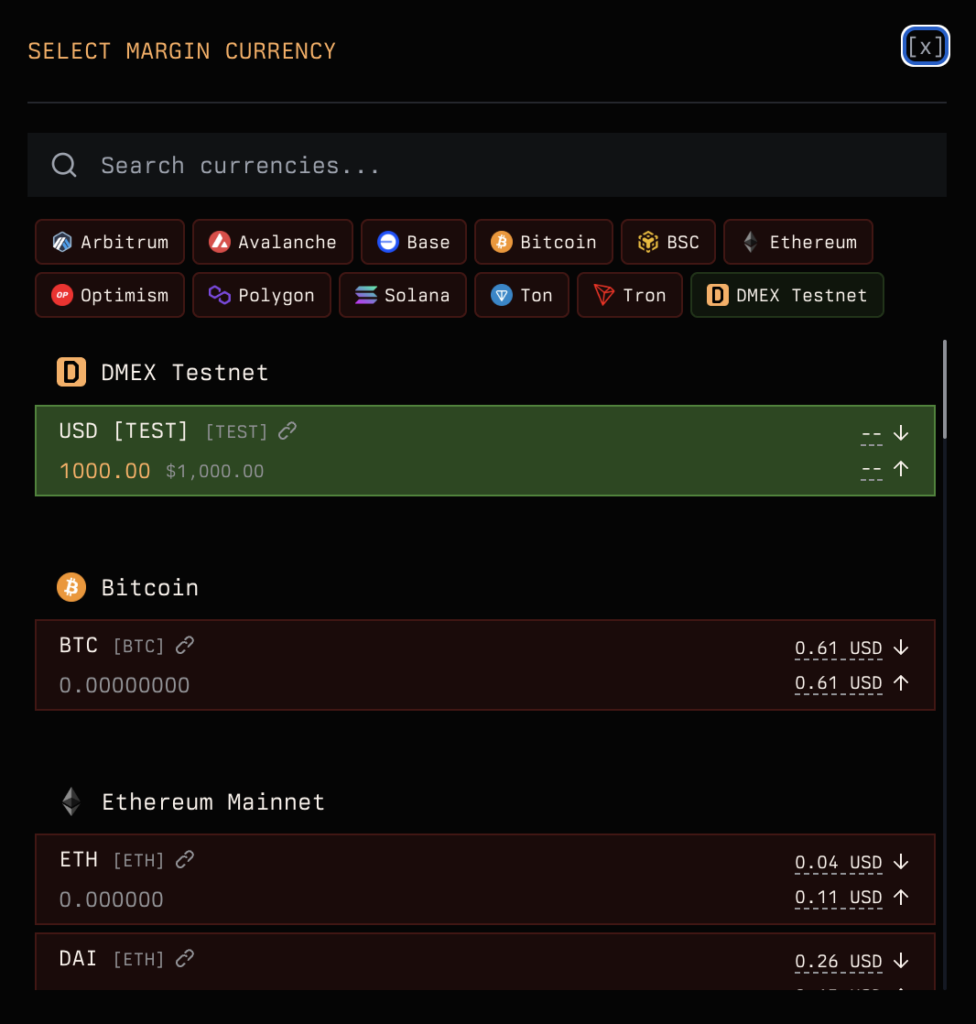
Isolated Margin by Default
DMEX primarily uses isolated margin, ensuring each position is independently collateralized.
Benefits include:
- Clear liquidation thresholds
- Reduced cross-position contagion
- Easier risk assessment
This design favors traders who want precise control over downside exposure.
Maintenance and Initial Margin
Each market has:
- Initial margin requirements
- Maintenance margin thresholds
These parameters adjust based on:
- Asset volatility
- Liquidity depth
- Historical behavior
DMEX errs on the side of capital preservation, not maximum gearing.
Fees and Funding
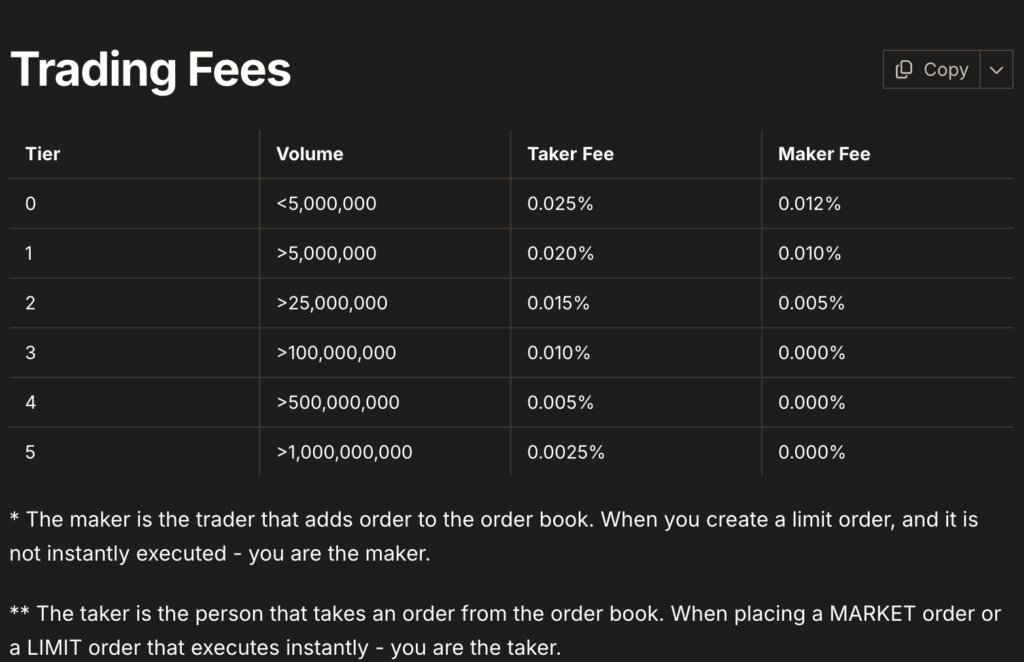
Trading Fees
DMEX employs a transparent fee structure:
- Maker and taker fees designed to encourage healthy liquidity
- No hidden execution costs
- Fees remain competitive with leading perp DEXs
Because gas usage is optimized, total trading costs remain reasonable.
Funding or Borrow Fees
Rather than relying on extreme funding volatility, DMEX uses measured funding or borrow cost mechanics to balance long and short demand.
Funding rates tend to be:
- Less erratic
- Easier to anticipate
- More suitable for multi-day positions
Liquidity Design
Liquidity Philosophy
DMEX prioritizes quality liquidity over quantity.
Instead of incentivizing mercenary volume, the protocol focuses on:
- Stable market makers
- Controlled depth
- Gradual expansion of markets
This reduces the risk of sudden liquidity collapse.
Market Depth
Liquidity is strongest on:
- Major crypto pairs
- Core ecosystem assets
Smaller markets are introduced cautiously and monitored continuously.
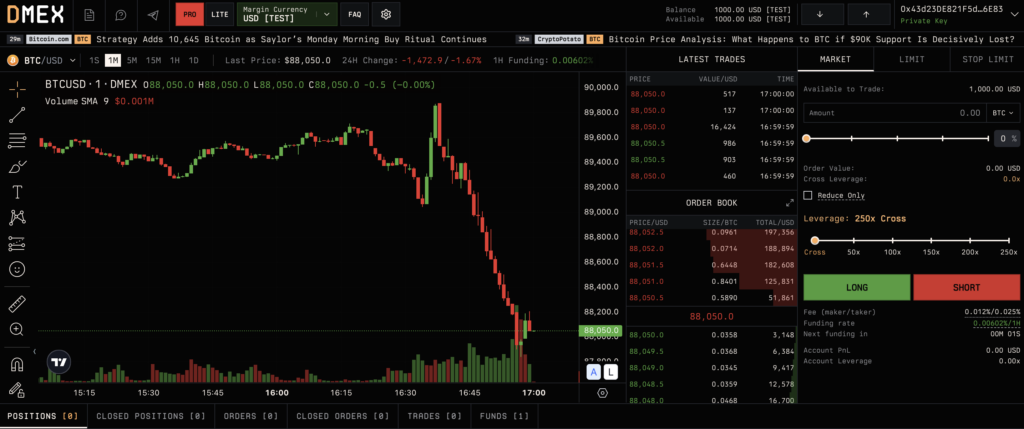
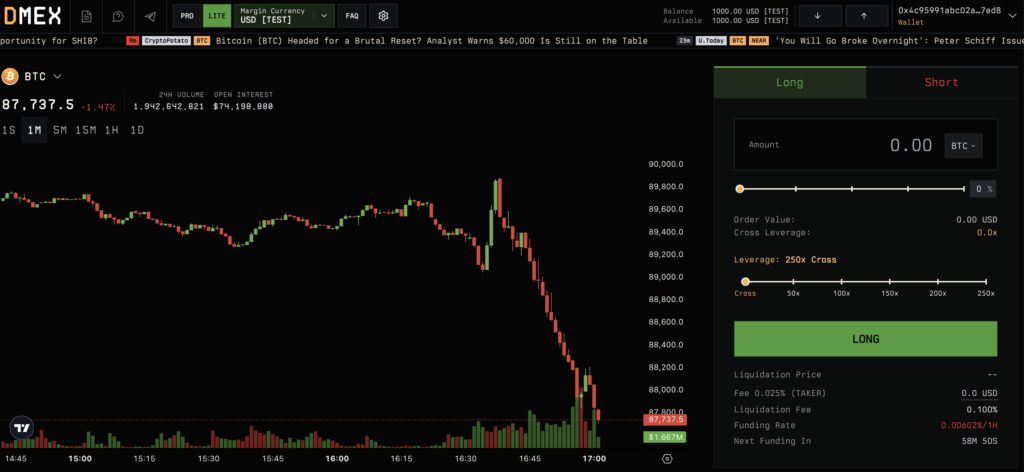
User Interface and Trading Experience
Clean, Professional Interface
DMEX’s interface is designed for traders who value clarity.
Core elements include:
- Real-time price charts
- Position overview and PnL
- Margin and liquidation indicators
- Simple order placement
The UI avoids unnecessary complexity while still offering professional-grade insight.
Trading Flow
From wallet connection to trade execution, DMEX emphasizes:
- Predictable interactions
- Low latency
- Minimal friction
This makes it suitable for both discretionary and systematic traders.
Risk Management and Liquidations
Deterministic Liquidation Logic
Liquidations occur when margin thresholds are breached.
DMEX’s liquidation engine:
- Uses predefined rules
- Applies conservative buffers
- Minimizes cascading failures
Partial liquidation may be used to reduce systemic shock.
Stress Scenarios
DMEX is designed to handle:
- Volatility spikes
- Sudden liquidity contraction
- Directional imbalance
Risk parameters adjust dynamically to protect the protocol.
Security Model
Smart Contract Safety
DMEX’s limited product scope reduces attack surface.
By focusing solely on perpetual trading, the protocol avoids unnecessary composability risks.
Oracle Design
Price feeds are aggregated from reliable sources and updated frequently.
Oracle safeguards are particularly important during:
- Low liquidity periods
- Sharp market moves
DMEX prioritizes price integrity over responsiveness.
DMEX vs Other Perp DEXs
DMEX vs gTrade
- gTrade uses oracle-only execution with a vault counterparty
- DMEX focuses on margin discipline and modular risk design
DMEX vs Drift
- Drift emphasizes speed and composability
- DMEX emphasizes predictability and isolation
DMEX vs Hyperliquid
- Hyperliquid dominates scale and throughput
- DMEX prioritizes controlled growth and risk containment
DMEX is not trying to win volume rankings — it is trying to remain solvent across cycles.
Who Should Use DMEX?
DMEX is ideal for:
- Risk-aware derivatives traders
- Medium-term positioning
- Traders who prefer isolated margin
- Users who value stability over hype
It is less suited for:
- High-frequency scalping
- Extreme leverage strategies
- Meme-driven speculation
Pros and Cons
Pros
- Strong risk controls
- Predictable execution
- Isolated margin safety
- Clean UI
- Sustainable design philosophy
Cons
- Smaller market selection
- Lower leverage than aggressive DEXs
- Less suitable for short-term volume farming
Final Verdict: Is DMEX Worth Using in 2026?
DMEX is a disciplined perpetual exchange built for traders who care about longevity.
It avoids the traps that have destroyed many derivatives protocols: excessive leverage, incentive-driven liquidity, and opaque risk.
For traders who want:
- Clear rules
- Capital preservation
- Sustainable on-chain derivatives
DMEX is a compelling choice.
Rating: ⭐⭐⭐⭐
Category: Risk-Disciplined Perpetual DEX
Best Use Case: Medium-term, capital-efficient derivatives trading
About the Author