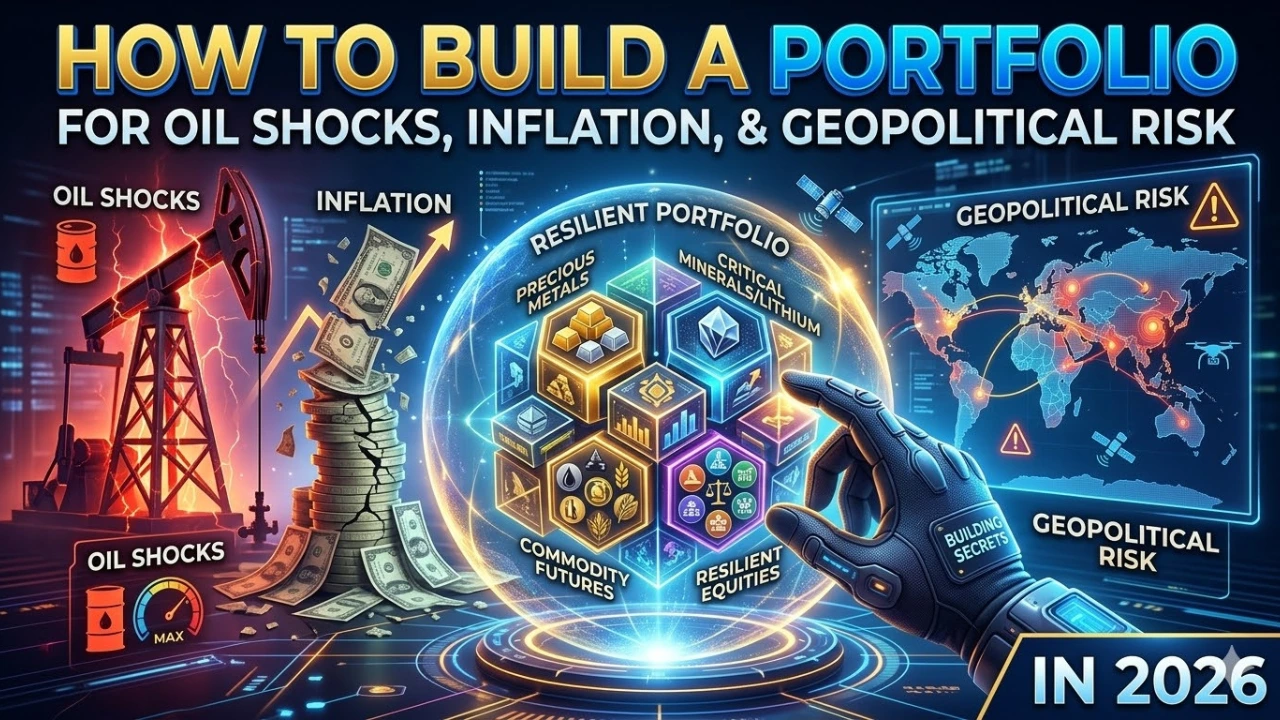
The oil market does not need a long war to punish households. It only needs enough disruption, uncertainty, and shipping friction to make traders price in scarcity.
That is exactly why the latest Middle East shock matters. In the past week, Reuters reported that the U.S.-Israeli war with Iran pushed Brent crude as high as roughly $119.50 intraday before prices fell sharply on hopes of de-escalation, with Brent still near $84.73 on March 10 after extreme swings. Reuters also reported that the Strait of Hormuz crisis disrupted regional flows so severely that Saudi Arabia redirected exports through its East-West pipeline to the Red Sea, while shipping groups rerouted vessels around Africa away from the Suez/Bab el-Mandeb corridor.
For ordinary investors, savers, and workers, this is not just a story about geopolitics. It is a story about petrol, freight, food, inflation, and fragility. When energy spikes, everything downstream starts to feel more expensive. And when markets calm, they do not always calm all the way back down.
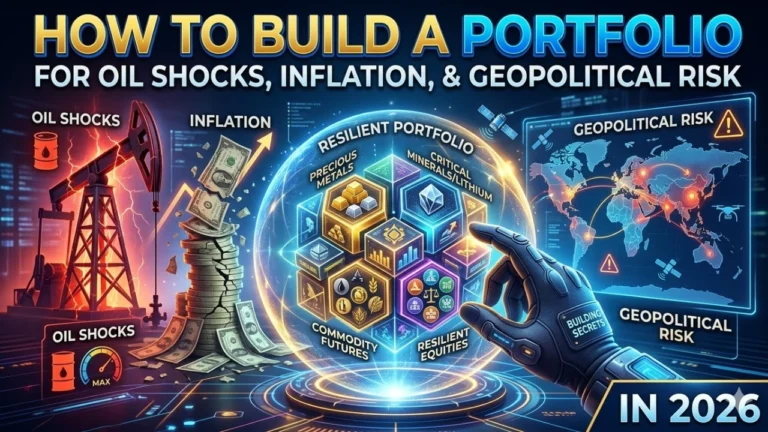
That is why you need a Middle East Shock Portfolio: not a panic portfolio, not a bunker portfolio, but a practical allocation framework for a world where conflict can move oil, shipping, inflation expectations, and digital asset flows in a matter of hours.
What this feels like right now
It feels like every headline carries a price tag. You read about missiles, shipping reroutes, oil terminals, and central bank dilemmas, and somewhere in the back of your mind you are already calculating fuel, groceries, utility bills, and what happens if your salary does not keep up. It feels like the world has become more expensive before it has become more understandable.
That feeling is not irrational. Reuters reported that analysts warned supply chains would not snap back immediately even if the conflict cools, and Aramco warned that a prolonged Hormuz closure could have “catastrophic consequences” for global oil markets.

Three investor archetypes this portfolio is built for
The anxious household allocator
You are not trying to beat the market. You are trying to protect purchasing power and avoid getting blindsided by another inflation spike.
The globally exposed operator
You run a business, work across borders, support family abroad, or depend on fast money movement. Shipping disruption, currency stress, and payment friction affect you directly.
The strategic risk-taker
You understand that crises create both danger and opportunity. You want a framework that lets you hedge inflation risk, keep liquidity, and still have some upside if monetary or geopolitical instability accelerates interest in digital assets.
The principle behind the portfolio
A Middle East shock affects portfolios through four channels:
- Oil and energy prices
- Shipping and supply chains
- Inflation and interest-rate expectations
- Risk sentiment and capital flows
Reuters’ recent reporting ties all four together: Gulf energy exports were disrupted, shipping rerouted around Africa, oil surged toward 2022 highs before retracing, and governments were already discussing emergency measures including potential stock releases.
A good shock portfolio therefore does four things:
- preserves near-term liquidity
- protects against inflation surprises
- keeps some upside to monetary disorder
- avoids forcing you to sell good assets under pressure

The portfolio framework
This is not financial advice or a one-size-fits-all mandate. It is a practical framework.
1. Cash and short-duration liquidity: 30% to 50%
This is the part many people hate because it feels boring. But in a crisis, boring is powerful.
You need liquidity for bills, optionality, and emotional stability. If oil spikes feed into broader inflation and risk-off sentiment, you do not want to be the person selling long-term assets to cover short-term stress. This bucket can sit in bank cash, money-market style instruments where appropriate, or low-friction liquid balances.
Its purpose is simple: survive volatility without becoming a forced seller.
2. Stablecoin reserve: 15% to 30%
Stablecoins are increasingly relevant in this type of environment because they offer digital dollar liquidity, cross-border flexibility, and faster payment portability. The IMF noted in late 2025 that stablecoins can improve payments and global finance, while also warning about regulatory and financial stability risks. A related IMF paper found stablecoin issuance had doubled over the prior two years and described roughly $1.5 trillion in cross-border payment flows, with emerging-market and developing-economy flows forming the largest share.
That makes a stablecoin allocation useful for:
- payment flexibility
- remittance resilience
- dry powder for market dislocations
- reducing dependence on a single banking rail
A practical setup could start with a liquid exchange account on Binance using code CPA_00SXKU7IO9, Bybit using 46164, or OKX using 2136301, then later adding a backup rail such as Kraken or a swap utility like ChangeNOW. The point is not brand loyalty. It is liquidity redundancy.

3. Bitcoin or digital hard-asset upside: 10% to 25%
A Middle East shock does not automatically mean Bitcoin goes up. In the first phase of a crisis, anything can sell off as markets de-risk. But if energy pressure feeds inflation, fiscal stress, or renewed concerns about monetary debasement, Bitcoin can re-enter the conversation as a non-sovereign hard asset with long-duration upside.
This bucket is not for near-term expenses. It is for the possibility that recurring geopolitical shocks keep making traditional money feel less stable, not more.
For simple access, Kraken, Binance, OKX, and Luno all work depending on region and experience.
4. Select commodity or energy exposure: 5% to 15%
This is the most direct inflation-shock hedge in the portfolio. If conflict keeps threatening oil transit or infrastructure, energy exposure can offset some of the pain caused elsewhere in the economy.
This does not mean chasing a vertical move after headlines. It means recognizing that if Hormuz remains fragile, rerouting and supply loss can keep a war premium embedded in energy markets even after short-term price pullbacks. Reuters reported that Hormuz normally handles about 20% of global oil transit and that Saudi Arabia had to reroute significant volumes via Yanbu and the East-West pipeline.
5. Tactical opportunity sleeve: 0% to 10%
This is optional. It exists for experienced users only.
If you understand market structure, you may want a small sleeve for tactical trades, basis, hedging, or event-driven entries. But this belongs on top of the portfolio, not at the core of it. The core is resilience. The sleeve is opportunity.
For advanced users, tools such as Deribit, Aevo, GMX, Drift, or Paradex can make sense. If you cannot clearly define liquidation risk, this sleeve should be zero.

Featured snippet table: The Middle East Shock Portfolio
|
Portfolio Bucket |
Typical Range |
Main Purpose |
Best For |
|
Cash / short-duration liquidity |
30%–50% |
Bills, stability, optionality |
Everyone |
|
Stablecoin reserve |
15%–30% |
Digital dollar flexibility, transfers, dry powder |
Most users |
|
Bitcoin / digital hard-asset upside |
10%–25% |
Long-term monetary hedge and upside |
Medium to long-term investors |
|
Commodity / energy exposure |
5%–15% |
Direct inflation and oil-shock hedge |
Users worried about energy spikes |
|
Tactical opportunity sleeve |
0%–10% |
Advanced trading or hedging |
Experienced users only |
Decision matrix
If your main fear is rising household costs
Prioritize cash, stablecoins, and modest commodity exposure.
If your main fear is currency weakness and payment friction
Prioritize stablecoins, exchange redundancy, and some Bitcoin.
If your main fear is missing the next leg of monetary instability
Prioritize Bitcoin, stablecoin dry powder, and a smaller liquidity bucket than the most cautious investor.
If your main fear is making a stupid move in a crisis
Prioritize simplicity. Fewer accounts. More liquidity. No leverage.

Fastest path to action in the next 15 minutes
- Work out how many months of expenses you can currently cover.
- Open one primary exchange account for stablecoins and Bitcoin access.
- Open one backup exchange account.
- Decide your split between cash, stablecoins, and long-term upside.
- Move only a small test amount first.
- Write down what would make you buy more, hold, or do nothing.
- Refuse to let headlines force impulsive trades.
A practical beginner version is simple:
When oil spikes, inflation is no longer an abstract macro chart. It becomes a household event.
The point of a shock portfolio is not to predict every headline. It is to make sure headlines cannot easily break you.
In a world of rerouted tankers, fragile sea lanes, and digital money rails, resilience beats bravado.

Mistakes that cost people money
The first mistake is treating every Middle East headline like a signal to go all in on oil.
The second is holding no liquidity because you want every dollar “working.”
The third is assuming stablecoins are the same as cash. They are useful, but they carry platform, custody, and structural risks.
The fourth is using leverage to “hedge” before learning what liquidation actually means.
The fifth is building a portfolio that only works if prices rise immediately.
The sixth is having no backup exchange or payment rail. A shock portfolio is partly about access, not just allocation.
Who should not do this
This framework is not for:
- people looking for a fast speculative trade dressed up as macro sophistication
- readers who are already financially stretched and tempted by leverage
- users unwilling to learn basic wallet, exchange, and transfer hygiene
- anyone who thinks one portfolio can remove all geopolitical risk
If you are very risk-averse, your version may simply be more cash, a smaller stablecoin reserve, and no tactical sleeve at all. That is perfectly valid.
Beginner, intermediate, and advanced action paths
Beginner
Start with one simple exchange and a small stablecoin reserve. Build a cash buffer first. Add Bitcoin slowly. Do not touch derivatives.
Intermediate
Use a two-exchange setup, hold part of your reserve in stablecoins, and build a deliberate long-term Bitcoin allocation. Consider a hardware wallet for long-term holdings.
Advanced
Add tactical overlays only if your core portfolio is already strong. Use options or perps only for defined scenarios and limited size. Deribit is useful for sophisticated hedging, but only if you already know exactly why you are there.
Final word
The Middle East shock portfolio is not really about the Middle East alone. It is about what the conflict reveals: the modern world still runs on vulnerable chokepoints, fragile supply chains, and confidence that can disappear quickly.
Reuters’ reporting over the past week makes that painfully clear: Hormuz disruption, Red Sea rerouting, Saudi export diversion, refinery shutdowns, and violent oil price swings all happened within days.
So the right portfolio response is not cinematic. It is disciplined.
Hold enough liquidity to breathe.
Hold enough stable flexibility to move.
Hold enough hard-asset upside to matter.
And never confuse panic with strategy.
Because when the next shock hits, the people who do best will not be the loudest forecasters.
They will be the ones who built optionality before it became expensive.
About the Author