The metaverse promises an immersive digital future, a place where we can work, play, socialize, and transact. But as AI advances at breakneck speed, blurring the lines between human and machine, a fundamental challenge emerges: How do we prove we’re actually human in this new digital frontier? With sophisticated AI agents capable of generating realistic content, engaging in nuanced conversations, and even executing complex strategies, the threat of bot-infested metaverses is real. Enter Proof-of-Humanity (PoH) – a critical layer of verification where AI itself will play a pivotal role in ensuring that the digital identities we encounter are genuinely organic, not algorithmic.
From spam accounts on social media to sophisticated bots manipulating markets, the internet has long battled against automated entities. In the metaverse, where economic activity, social interaction, and even governance could take place, the stakes are far higher. A metaverse overrun by bots would be exploited, untrustworthy, and ultimately, uninhabitable for genuine human interaction.

The Bot Problem: Why It Matters More in the Metaverse
Current internet verification methods (CAPTCHAs, two-factor authentication) are often inconvenient and increasingly vulnerable to advanced AI. In the metaverse, the “bot problem” intensifies because:
- Economic Exploitation: Bots could farm digital assets, manipulate virtual economies, and unfairly compete for resources or rewards.
- Social Degradation: Imagine interacting with AI characters you believe are human, only to discover they’re programmed for persuasion or deception. This erodes trust.
- Identity Theft & Impersonation: AI could create incredibly realistic “digital twins” of real people, making impersonation effortless and dangerous.
- Governance Manipulation: In decentralized autonomous organizations (DAOs) within the metaverse, bots could sway votes and control resources, undermining democratic principles.

Proof-of-Humanity: A Multi-Layered AI Solution
Proof-of-Humanity isn’t a single technology but a multi-faceted approach, and AI is increasingly central to its success. Here’s how it’s evolving:
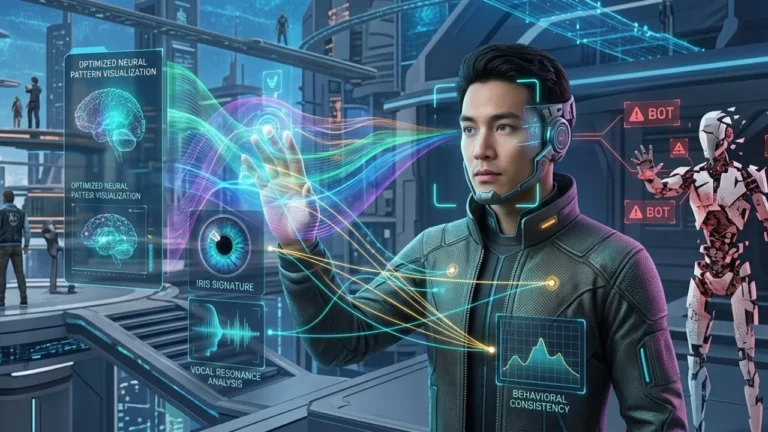
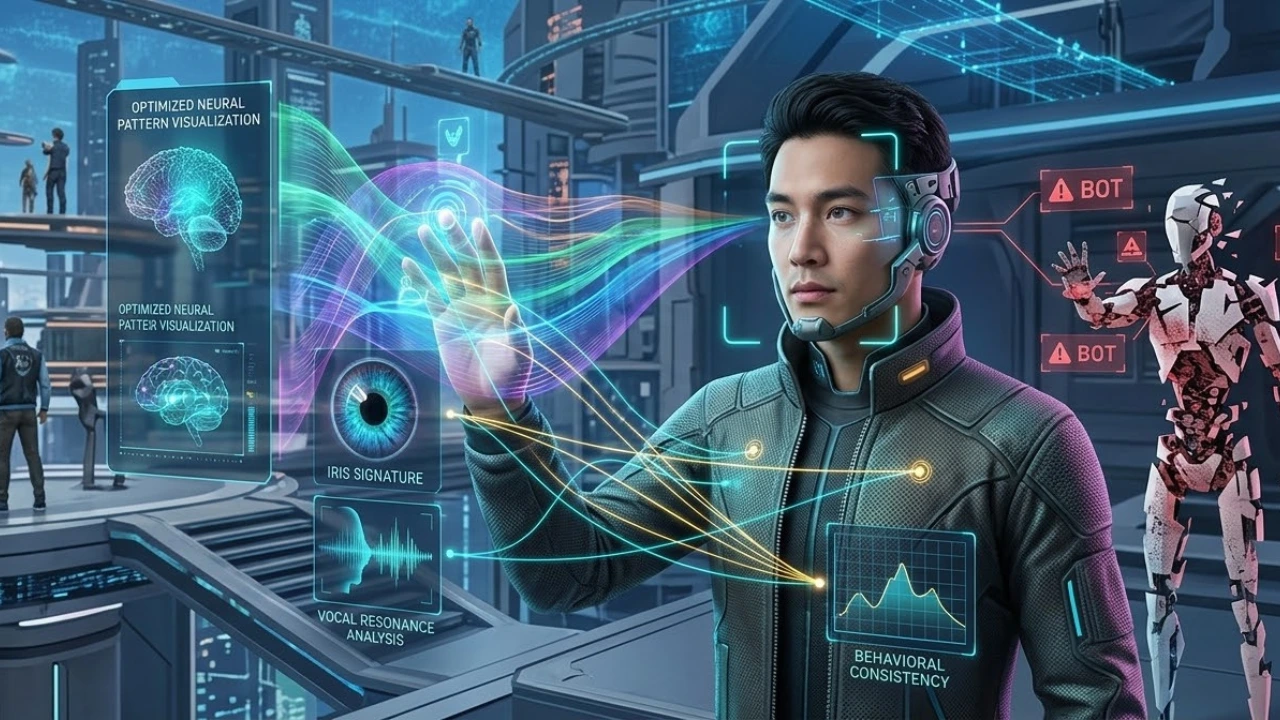
- Behavioral Biometrics: AI analyzes subtle human behaviors that are difficult for bots to replicate – typing patterns, mouse movements, facial micro-expressions (via webcam), voice intonations, and even how we navigate a 3D environment. This creates a unique “human fingerprint.”
- Liveness Detection: AI-powered facial recognition and voice analysis can verify that a user is a living person, not just a static image or a pre-recorded audio clip.
- Social Graph Analysis: AI can analyze a user’s social connections and activity patterns within the metaverse (and potentially linked external social media) to identify organic networks versus bot farms. Bots often have suspicious interaction patterns.
- Decentralized Identity (DID) Integration: AI can cross-reference verifiable credentials associated with a user’s decentralized identity on a blockchain, such as governmental IDs or biometric hashes, without revealing the underlying sensitive data.
- Gamified Challenges: While CAPTCHAs are basic, AI can create increasingly complex, personalized, and adaptive challenges that require human-like cognitive abilities, making them harder for bots to solve.

The Role of Blockchain in Securing Humanity
Blockchain technology is the perfect partner for AI in Proof-of-Humanity because it provides the immutable, transparent, and decentralized infrastructure necessary to trust these verification processes.
- Immutable Records: Once a Proof-of-Humanity check is passed, a verifiable credential can be stored on a blockchain, making it tamper-proof.
- Decentralized Verification: No single entity controls the verification process; the network itself validates human identity.
- Privacy-Preserving: Zero-knowledge proofs (ZKP) can allow users to prove their humanity without revealing sensitive personal data to the verifier, a crucial aspect for metaverse privacy.
Why This Matters for the Future of Web3 and Your Digital Life
The success of the metaverse, and indeed many aspects of Web3, hinges on our ability to trust the identities we interact with. Without robust Proof-of-Humanity, the digital world risks becoming an unmanageable Wild West dominated by algorithms.
For individuals, Proof-of-Humanity means:
- Genuine Interactions: Knowing you’re interacting with real people, fostering authentic communities.
- Fair Economies: Ensuring economic opportunities aren’t unfairly skewed by bots.
- Enhanced Security: Protecting your digital identity from AI-driven impersonation.
- Privacy-Preserving Verification: Proving your humanity without sacrificing your personal data to centralized entities.

Getting Ready for an Authenticated Metaverse
As we step into a future where proving our humanity becomes increasingly important, understanding and utilizing tools that support this is key.
When you’re interacting with decentralized applications or metaverse platforms, look for those that prioritize robust identity verification and support emerging Proof-of-Humanity protocols. Securely managing your digital identity often begins with choosing the right cryptocurrency exchange for acquiring the necessary tokens or for KYC (Know Your Customer) compliant interactions. Exchanges like Binance, OKX, and Coinbase (if available in your region) are pioneers in compliant identity verification, which lays a foundation for future PoH integration.
For those looking to engage with projects building decentralized identity solutions or new Proof-of-Humanity protocols, platforms like KuCoin and MEXC offer access to a wider range of emerging tokens that may be part of these ecosystems. Always remember that personal hardware wallets like Ledger are crucial for securing your digital assets, regardless of the verification methods in play.

The Dawn of a Human-Centric Digital World
Proof-of-Humanity, powered by advanced AI and secured by blockchain, is not just a technical challenge; it’s a societal imperative. It’s about preserving the integrity of human interaction, ensuring fair digital economies, and protecting individual sovereignty in an increasingly complex digital landscape. As the metaverse evolves, verifying “humanness” will be as crucial as verifying a transaction.
Are you ready to prove you’re human in the metaverse? The tools are being built to ensure a genuinely human-centric digital future.
About the Author