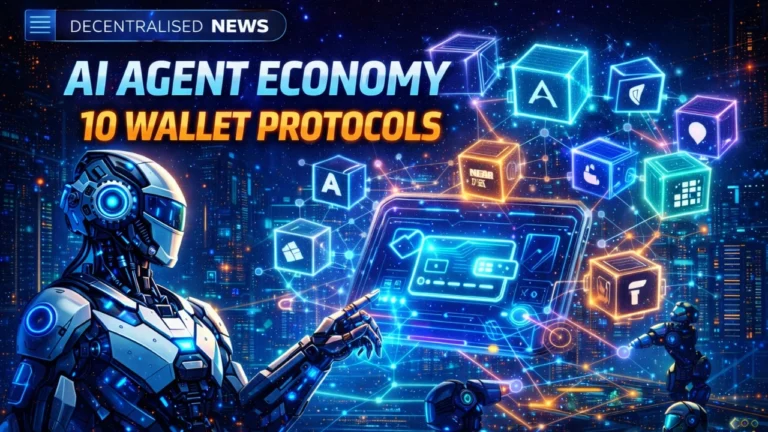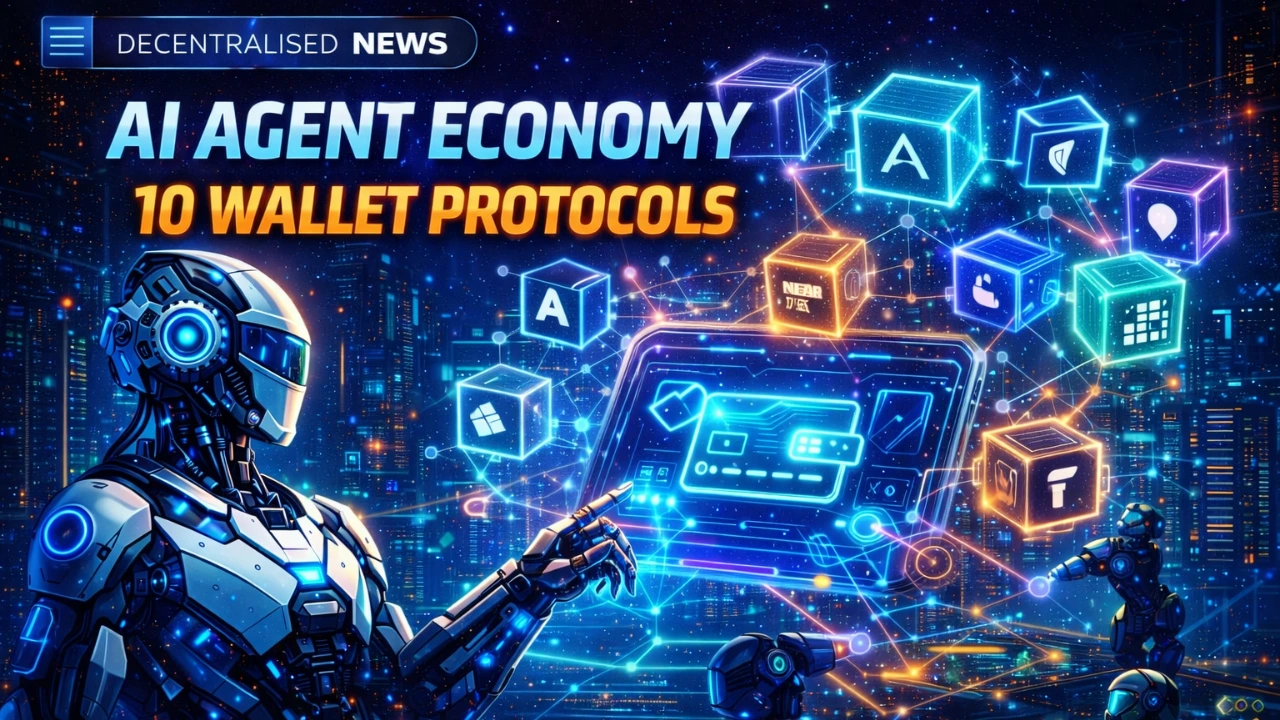
The next wave of artificial intelligence is not just about smarter models — it’s about autonomous AI agents that can interact with the digital economy.
These agents can already analyze data, execute trades, interact with APIs, and automate workflows. But for the agent economy to truly scale, these systems need something fundamental:
wallets.
An AI agent wallet allows software to hold digital assets, sign transactions, interact with smart contracts, and pay for services autonomously. In many ways, wallets are becoming the financial identity layer for autonomous software.
Without wallets, AI agents are just tools. With wallets, they become economic actors capable of earning, spending, and coordinating with other systems.
As the AI-agent ecosystem expands, a new category of infrastructure is emerging: AI agent wallets and wallet frameworks designed specifically for autonomous software.
Below are 10 of the most important AI agent wallet projects and frameworks to watch in 2026.
1. Coinbase AgentKit
One of the most talked-about developments in the agent economy is Coinbase’s AgentKit, a toolkit designed specifically for building autonomous agents with crypto wallets.
AgentKit allows developers to give AI agents the ability to:
- create and manage wallets
- execute blockchain transactions
- interact with decentralized applications
- make automated payments
- perform on-chain actions using APIs
Because AgentKit integrates with the broader Coinbase developer ecosystem, it makes it much easier for developers to embed crypto wallets directly into AI-powered applications.
This could become one of the most widely adopted frameworks for agentic Web3 development.

2. Fetch.ai Agent Wallet
Fetch.ai has been building autonomous agent infrastructure since long before the current AI boom.
Within the Fetch ecosystem, agents are capable of:
- discovering services
- negotiating transactions
- executing payments
- interacting with decentralized marketplaces
Each agent can operate with a wallet-enabled identity, allowing it to participate in decentralized economic activity.
Fetch’s approach remains one of the clearest visions of machine-to-machine commerce powered by blockchain.
3. NEAR AI Wallet Framework
NEAR has become increasingly active in the AI infrastructure space with tools designed to enable chain abstraction and autonomous agent interaction.
The NEAR wallet framework enables agents to:
- manage multi-chain transactions
- interact with smart contracts
- securely manage cryptographic keys
- automate workflows across blockchains
Because NEAR is pushing heavily into chain abstraction, its wallet architecture may become particularly important for agents that need to operate across multiple networks.
4. Safe (Gnosis Safe) Automation Wallets
Safe has long been one of the most widely used smart contract wallet frameworks in the Ethereum ecosystem.
While originally designed for multi-signature treasury management, Safe is increasingly being used as the foundation for programmable wallets that can interact with automated systems and bots.
Through Safe modules and automation frameworks, wallets can:
- trigger transactions automatically
- interact with DeFi protocols
- execute governance actions
- run scheduled transactions
These capabilities make Safe an attractive option for developers building AI-driven automation systems in Web3.

5. Account Abstraction Wallet Frameworks (ERC-4337)
Account abstraction represents one of the most important architectural shifts in blockchain wallets.
Under ERC-4337, wallets become programmable smart contracts rather than simple externally owned accounts.
This allows for powerful features such as:
- automated transaction logic
- delegated execution
- gas sponsorship
- programmable permissions
For AI agents, this is extremely important. Account abstraction makes it possible to design wallets where agents can execute predefined financial actions safely within guardrails.
Several projects and wallet frameworks are already adopting ERC-4337 to enable more flexible agent-driven interactions.
6. MetaMask Snaps AI Integrations
MetaMask remains one of the largest wallet ecosystems in crypto, and its Snaps framework is expanding what wallets can do.
Snaps allows developers to add custom functionality directly into the MetaMask wallet environment, including:
- AI-powered automation tools
- multi-chain interaction capabilities
- security and monitoring agents
- custom transaction logic
While MetaMask is still primarily a human-facing wallet, Snaps opens the door to agent-assisted wallet management and automation.

7. Privy Embedded Wallet Infrastructure
Privy is building infrastructure designed to make wallets easier to integrate directly into applications.
Instead of forcing users to install external wallets, developers can embed wallets directly inside apps.
This approach works well for AI-powered platforms because agents can:
- generate and manage wallets programmatically
- handle authentication automatically
- manage keys through secure infrastructure
- interact with blockchain services seamlessly
Embedded wallet infrastructure like Privy may become a key building block for AI-native applications.
8. Lit Protocol Programmable Key Infrastructure
Lit Protocol is building infrastructure for programmable cryptographic keys, which can be used to create wallets controlled by programmable conditions.
These wallets can be configured so that transactions only execute when certain conditions are met.
Examples include:
- AI-driven trading strategies
- automated treasury management
- programmable governance execution
- secure agent-based authentication
This kind of programmable access control is extremely valuable for AI agent wallets that require strict security policies.

9. Web3Auth Embedded Wallet SDK
Web3Auth focuses on making wallet onboarding easier through authentication-based wallet generation.
Developers can integrate wallets into applications using familiar login methods such as:
- Google authentication
- social login
- passwordless authentication
For AI applications, this kind of infrastructure simplifies the process of creating and managing wallets for large numbers of agents or users.
10. MPC Wallet Infrastructure (Fireblocks / ZenGo)
Multi-party computation (MPC) wallets represent a more secure approach to private key management.
Rather than storing keys in one location, MPC splits the cryptographic process across multiple parties.
This offers advantages such as:
- enhanced security
- reduced key theft risk
- distributed signing mechanisms
- institutional-grade wallet management
MPC infrastructure may become especially important for high-value AI agents managing large portfolios or executing complex financial operations.
Why AI Agent Wallets Matter
If AI agents are going to interact with decentralized networks, they need:
- digital identities
- programmable financial accounts
- automated transaction capabilities
- secure key management
- cross-chain interoperability
Wallet infrastructure provides the financial backbone of the agent economy.
Just as traditional wallets enabled human participation in crypto, agent wallets will enable software participation in digital markets.
How Investors Can Gain Exposure to the AI Agent Ecosystem
The AI agent sector spans multiple categories of crypto infrastructure including:
- AI tokens
- launchpad platforms
- agent frameworks
- compute networks
- payment protocols
- decentralized data markets
Many of these assets can be traded on major exchanges.
Popular platforms include:
For advanced market analytics and charting tools:
ArbitrageScanner
https://arbitragescanner.io/?ref=BLE83HYJFJ
For secure long-term storage of digital assets:
Ledger Hardware Wallet
CoolWallet Pro
KeepKey Hardware Wallet
Final Thoughts
The future of AI is not just about intelligence — it is about autonomy.
As AI systems evolve into independent agents capable of interacting with digital markets, wallet infrastructure will become one of the most important layers of the Web3 ecosystem.
The platforms enabling autonomous agents to hold assets, execute transactions, and interact with decentralized services may ultimately power the financial layer of the machine economy.
And just as crypto wallets once unlocked decentralized finance for humans, AI agent wallets may unlock it for software.

Start Here — Build Your Crypto Infrastructure Safely
You don’t need to use everything at once.
Professionals reduce risk by having access to multiple rails so they are never dependent on a single platform.
Below is a simple, practical setup used by many experienced traders and investors.
1) Your Fiat Gateway (Primary Access)
Best starting point for deposits & withdrawals
Binance — reliable onboarding, deep liquidity, global coverage
👉 sign up
Why open this:
- Move from bank → crypto easily
- Convert large amounts efficiently
- Emergency exit capability
2) Your Trading Execution Venue (Fast & Flexible)
Best for active trading and broad market access
MEXC — huge altcoin selection & low trading friction
👉 sign up
Why open this:
- Trade markets not listed elsewhere
- Better execution during volatility
- Lower dependence on a single exchange
3) Your Advanced Tools & Derivatives Platform
Best for leverage, hedging and professional execution
Bybit — strong order controls & derivatives infrastructure
👉 sign up
Why open this:
- Proper stop loss tools
- Hedging capability
- Strategy flexibility
4) Your Yield & Passive Income Layer
Best for structured products and capital efficiency
Gate.com — structured yield & automated earning tools
👉 sign up
Why open this:
- Earn on idle capital
- Diversify platform risk
- Access structured strategies
5) Your Altcoin & Ecosystem Expansion Layer
Best for early market access and wide listings
KuCoin — broad token ecosystem
👉 sign up
Why open this:
- Access emerging markets
- Portfolio diversification
- Redundancy if one platform restricts access
Why This Structure Matters
Using one exchange creates a single point of failure.
Using multiple rails creates:
- Liquidity redundancy
- Faster reaction ability
- Lower operational risk
- Greater opportunity access
You don’t need large capital to start — you just need prepared infrastructure.
Practical Next Step
Open accounts gradually and verify them before you need them.
Most people only prepare during stress —
professionals prepare before it.
(Decentralised News provides infrastructure education, not financial advice. Always use proper security practices.)
About the Author