What Matters
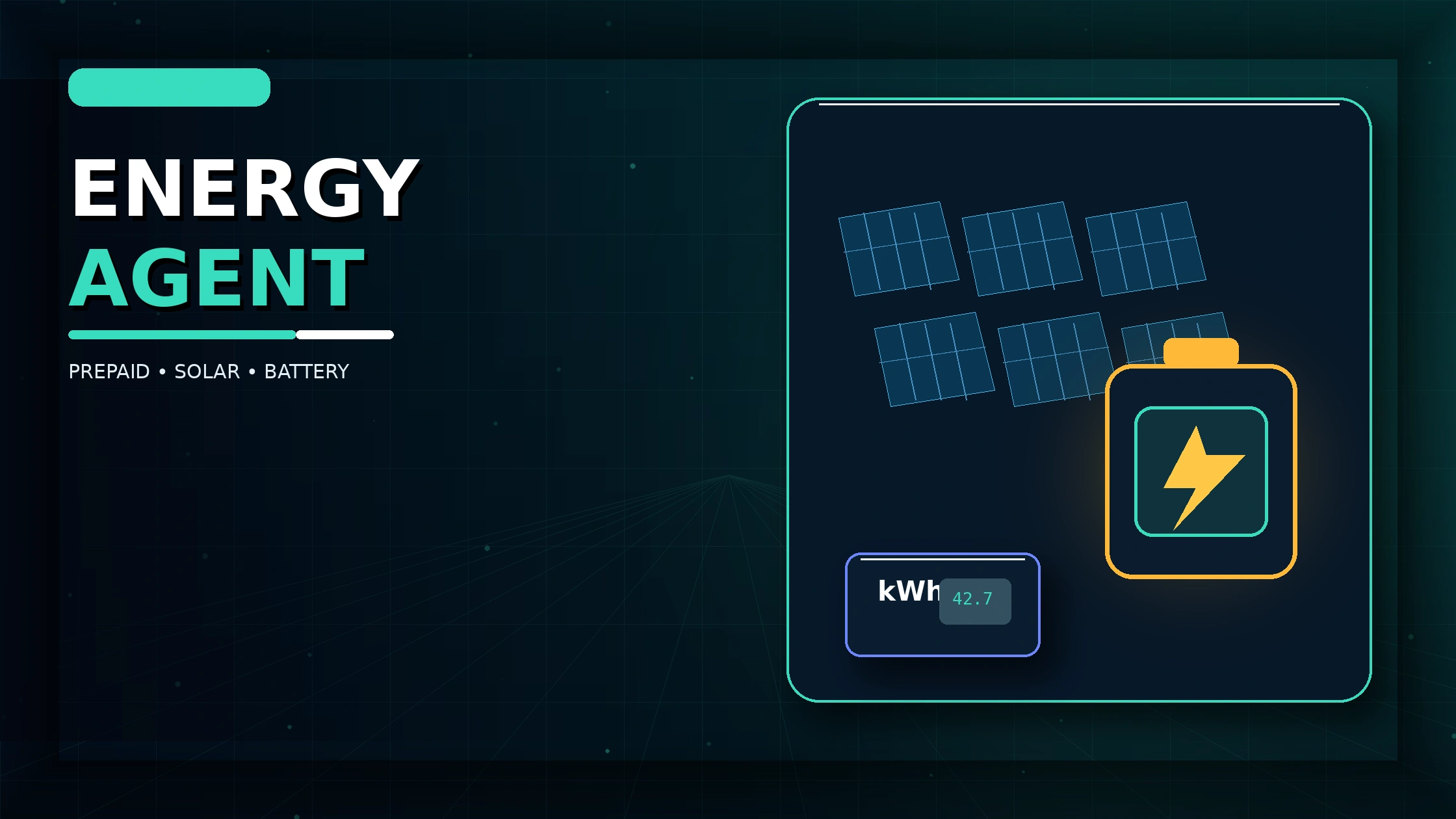
An energy agent can forecast, schedule and alert; it should not improvise electrical safety or utility rules. The useful South African workflow combines the correct Eskom or municipal schedule, prepaid consumption, essential-load priorities, solar forecast, battery state and approved device controls. The owner decides the comfort and business trade-offs; qualified installers and utilities determine compliant connection.
DN Evidence Block
Reviewed: 21 November 2026. Primary evidence: Eskom load-shedding schedules, prepaid-vending information and 2026 rooftop-solar registration guidance.
Boundary: outages, tariffs, municipal schedules, registration processes and incentives change. A March 2026 Eskom notice extended a registration fee waiver only to 30 September 2026; that date has passed, so verify the current position rather than relying on the old waiver.
Six Energy-Agent Workflows
| Workflow | Data | Agent output | Required control | Main risk |
|---|---|---|---|---|
| Schedule planning | Correct Eskom or municipal area and stage | Expected outage windows and task plan | Official-source timestamp and fallback | Wrong area or stale stage |
| Prepaid forecast | Meter reading, purchases and consumption | Estimated days remaining and purchase reminder | Approved vendor and manual token verification | Incorrect tariff or meter data |
| Essential-load control | Device watts, priority and battery state | Load-shed plan and runtime estimate | Hard device limits and owner override | Overload or critical device shutdown |
| Solar and battery dispatch | Forecast, generation, tariff and state of charge | Charge/discharge recommendation | Installer-approved inverter settings | Battery damage or unsafe control |
| Tariff optimization | Utility tariff and interval use | Shiftable-load schedule | Current tariff version | Savings based on wrong rate |
| Maintenance alerts | Inverter, battery and breaker events | Diagnostic summary and service ticket | Qualified electrician escalation | Model attempts technical repair |
1. Resolve the Correct Schedule First
Eskom publishes schedules for direct customers, while municipal customers may have different schedules. Store the exact supply authority, area and source. Record the retrieval time because stages and notices can change.
The agent should state uncertainty and provide a manual source link. It must not switch critical medical, security or refrigeration loads solely because a schedule predicted an outage.
2. Forecast Prepaid Consumption
Use meter readings and actual purchase records rather than assuming every token maps to the same unit price. Tariffs can be inclining or time-sensitive, and municipal charges differ. Estimate a range based on recent daily consumption and season.
Use approved vending channels. The agent can prepare the purchase amount and reminder, while the user confirms the meter, vendor and token.
3. Prioritize Essential Loads
List device wattage, startup surge, priority, maximum interruption and operating window. Refrigeration, connectivity, lighting and security may rank above entertainment or heating. Small businesses should define the minimum load needed to continue trading.
Device control should use hard caps outside the language model. If the measured load or battery state is inconsistent, the system should fail open or closed according to a documented safety policy.
4. Optimize Solar and Battery Use Safely
The agent can forecast production, compare load and recommend when to charge or reserve energy. It should not override inverter, battery or grid settings outside installer-approved ranges. Battery chemistry, warranty, temperature and depth-of-discharge limits matter.
South African grid-connected small-scale embedded generation must follow supplier and national requirements. Eskom’s 2026 guidance emphasized registration and electrical documentation. Check the current utility and municipal process for the installation.
DN Rule
An optimization model is not an electrician. Electrical connection, protection, certification and fault repair belong to qualified people and approved equipment.
5. Measure Savings Against the Right Baseline
Solar generation is not equal to bill savings when energy is curtailed, exported without credit or consumed at a different tariff. Compare interval load, self-consumption, grid purchases, battery loss, finance and maintenance.
For outage resilience, value avoided spoilage, downtime and lost sales separately from energy savings.
6. Keep a Manual Override
Users should see the current schedule, battery state, planned actions and why the agent chose them. Provide one control to pause automation and a safe default for lost connectivity.
Log device commands, meter data and overrides. An unexplained remote switch can create safety and trust problems.
DN Household and Small-Business Energy Planner
Estimate essential-load battery runtime and a simple solar grid-cost offset.
This simplified model excludes fixed charges, tariff blocks, finance, export credits, degradation and maintenance.
Worked Example
A 5 kWh battery at 88% usable system efficiency provides 4.4 kWh. At a continuous essential load of 0.8 kW, estimated runtime is 5.5 hours before reserve and surge effects. If 10 kWh of solar offsets an 18 kWh daily load at R3.20/kWh, the simple maximum monthly energy offset is about R960 before fixed charges and system costs.
Methodology and Limitations
DN evaluated energy agents by schedule provenance, meter data, device priority, electrical authority, current tariffs and user override. The calculator is a planning estimate, not an electrical design or quotation.
Frequently Asked Questions
Can an AI agent predict load shedding?
It can monitor official notices and patterns, but operational decisions can change. Use current official schedules and a fallback.
Can it buy prepaid electricity automatically?
It can prepare a purchase through an approved provider, but the user should verify the meter, amount and token.
Can it control my inverter?
Only through supported settings and installer-approved limits. Safety-critical controls should not be left to free-form model reasoning.
Do rooftop solar systems need registration?
Grid-connected systems must follow current supplier and national requirements. Check Eskom or the relevant municipality for the latest process.
What is the best first workflow?
Read-only schedule, consumption and battery alerts before automatic device control.
Primary Sources
- Eskom Load-Shedding Schedules
- Eskom Approved Prepayment Links
- Eskom 2026 Rooftop Solar Registration Notice
- National Energy Regulator of South Africa
Editorial disclosure: no utility, solar installer or energy platform paid for this framework.
About the Author