What Matters
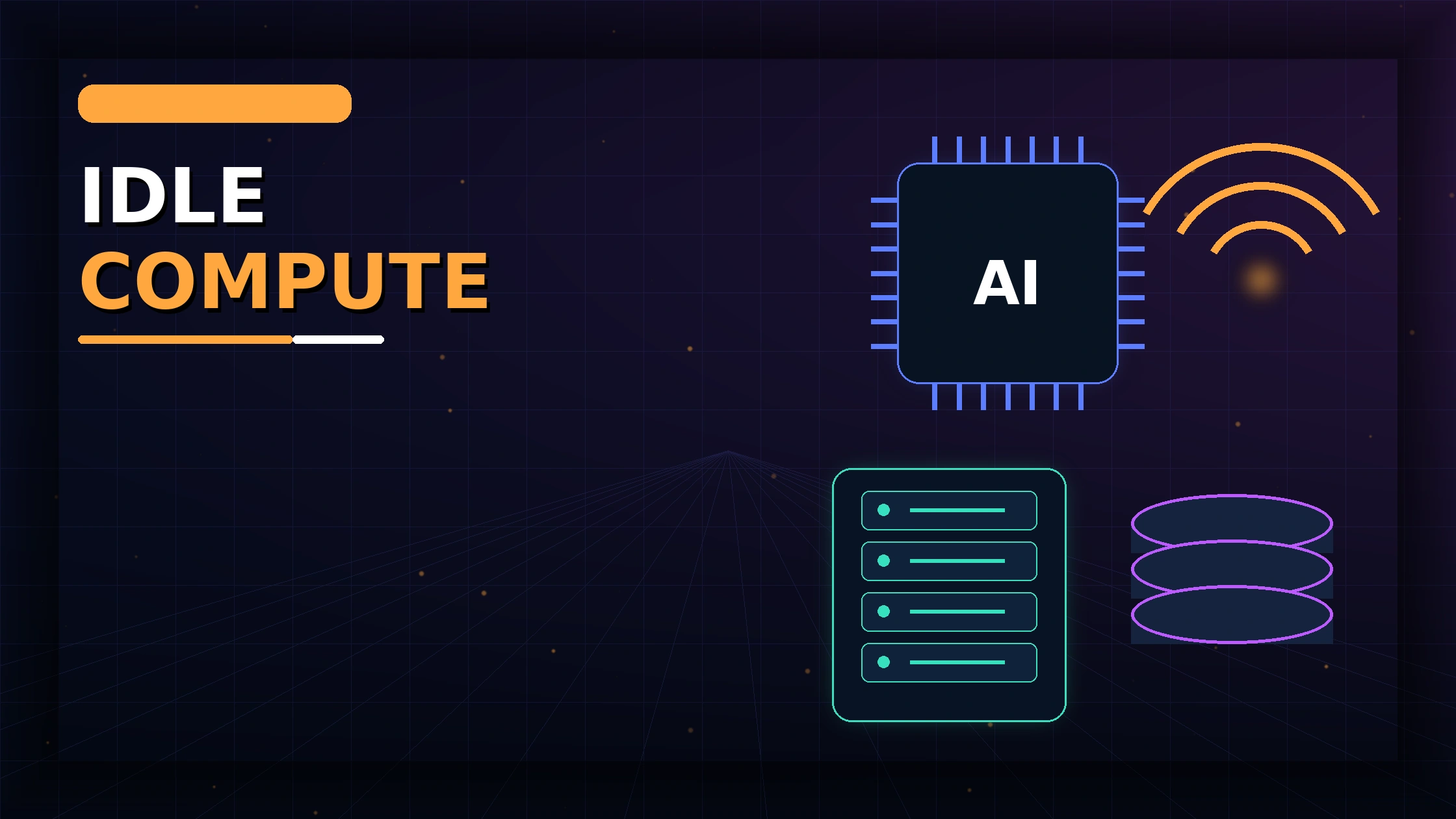
Idle hardware only becomes a business when demand, uptime, power cost and operating effort line up. A spare GPU, server, hard drive or internet connection can supply a decentralized network, but token rewards are not the same as profit. Utilization may be low, onboarding may be gated, hardware can depreciate, and residential bandwidth can carry legal or reputational risk.
DN Evidence Block
Reviewed: 17 November 2026. Primary evidence: Akash provider documentation, Render Network node-operator and hardware guidance, Filecoin provider documentation, Mysterium node-runner documentation and official network materials.
Boundary: DN did not run hardware on every network or verify a universal earnings rate. Revenue depends on hardware, geography, demand, eligibility, uptime and token value. This article uses scenario economics rather than income promises.
Four Resource Markets, Four Different Businesses
| Resource | Representative networks | What buyers need | Operator burden | Primary risk |
|---|---|---|---|---|
| GPU or CPU compute | Akash, Render, io.net and similar marketplaces | Containers, rendering, inference or batch compute | Linux, drivers, networking, orchestration, monitoring | Low utilization or hardware mismatch |
| Storage | Filecoin and decentralized archival systems | Durable, provable data storage | Capacity planning, sealing or proof operations, uptime | Capital intensity and operational penalties |
| Bandwidth and IP | Mysterium and other distributed connectivity networks | VPN, proxy or data-transfer capacity | Router configuration, uptime, jurisdiction controls | Traffic abuse, ISP terms and IP reputation |
| Specialized edge resources | Mapping, sensing, telecom or verification networks | Location-specific observations or connectivity | Device placement, coverage, data quality | Token incentives exceed real demand |
1. Compute Provider: Akash
Akash providers supply compute through a decentralized cloud marketplace. The current provider documentation makes the operating requirement clear: a serious provider needs Linux administration, networking, hardware or cloud resources, a domain and time for setup and maintenance. The recommended playbook can build Kubernetes-based infrastructure, while provider operations include lease management, monitoring and pricing.
This is not a one-click home-computer side hustle. A provider competes on usable inventory, price, reliability, attributes and operational support. The correct first question is whether the machine can attract leases at a price above power, bandwidth, depreciation, maintenance and opportunity cost.
Best use case
Existing servers or GPU systems that are already owned, properly cooled and operated by someone comfortable with Linux and network administration. Buying new hardware solely on projected token revenue is a different and much riskier investment decision.
2. GPU Rendering and Compute: Render Network
Render connects creators with node operators who provide GPU capacity. Official guidance specifies CUDA-compatible NVIDIA hardware, meaningful RAM, storage and network requirements. Onboarding may include a queue or benchmark process, which means owning a qualifying GPU does not guarantee immediate utilization.
The network’s burn-and-mint model connects completed work to token economics, but an operator still has to account for rejected work, downtime, electricity, hardware wear and the value of alternative uses. Render’s own compute-node guidance warns against purchasing new hardware merely to join a waitlist.
3. Storage Provider: Filecoin
Filecoin storage providers participate in a more capital- and operations-intensive market than simple consumer file sharing. Storage capacity, proofs, collateral, reputation, deal flow and monitoring all matter. Provider analytics and monitoring tools exist because storage obligations are ongoing, not completed when a file is first copied.
Small operators should distinguish between running a full storage-provider business and using lighter applications that route data to established providers. The former is infrastructure operations; the latter is application development.
4. Bandwidth Node: Mysterium
Mysterium lets node runners provide VPN and proxy capacity from supported devices. Official documentation says revenue depends on demand, region, node type, IP quality, stable connectivity and uptime. It also states that the network charges a service fee and that on-chain withdrawal fees may apply.
The risk is not only technical. A residential IP may be used by third-party traffic. Operators should understand verified-traffic settings, ISP terms, local law, abuse handling and the consequences of their IP reputation. “Unused bandwidth” is not economically or legally free.
5. Supplier Markets With Gated Onboarding
Some decentralized compute networks use supplier applications, hardware verification or capacity queues. That can improve quality, but it changes the business model. A machine that technically meets a specification may still sit idle if the network has excess supply, limited demand or an onboarding backlog.
Before installing anything, verify:
- whether onboarding is open in your region;
- the supported GPU, CPU, operating system and driver versions;
- whether jobs are assigned automatically or require competitive pricing;
- how failed jobs, downtime and rejected work affect payment;
- the payout asset, settlement schedule and withdrawal cost;
- whether the application can use all or only part of the machine.
DN Rule
Do not buy hardware because a calculator shows gross monthly revenue. Use measured utilization, local power cost, realistic resale value and a failure reserve. If the project only works at 100% utilization, it does not work.
The Real Cost Stack
| Cost | What to measure | Common mistake |
|---|---|---|
| Electricity | Average wall draw, hours active, local price per kWh | Using GPU TDP rather than measured system draw |
| Utilization | Paid hours divided by available hours | Assuming every available hour earns revenue |
| Depreciation | Purchase price minus expected resale value over useful life | Treating owned hardware as free |
| Cooling | Additional HVAC or fan power | Ignoring ambient temperature and seasonal load |
| Bandwidth | Data caps, upload speed, ISP limits and IP cost | Assuming residential service permits commercial resale |
| Operations | Setup, monitoring, updates, incident time | Valuing operator labor at zero |
| Token exposure | Payout value at receipt and liquidation | Using a peak token price in the forecast |
DN Idle-Compute Break-Even Calculator
Enter a conservative monthly scenario. Use paid utilization, not theoretical availability.
This simplified model excludes tax, financing, downtime spikes, cooling beyond system draw and token-price changes.
Worked Scenario
A machine could generate $300 monthly at continuous paid use, but only 35% of available time is expected to be billable. That produces $105 of utilization-adjusted revenue. A 450-watt system running continuously uses about 324 kWh per 30-day month. At $0.18 per kWh, electricity alone is about $58. Add $60 of depreciation, $50 of other costs and four hours of operator time at $25, and the operation is deeply negative.
The result may improve if the hardware would otherwise be idle, power is cheaper, utilization is higher, or operator effort is negligible. The point is that the token payout is only one line in the ledger.
How to Run a 30-Day Pilot
- Inventory the machine: GPU, VRAM, CPU, RAM, storage, operating system, network and measured power draw.
- Check current eligibility: official requirements, waitlists and geographic limitations.
- Create a dedicated wallet and operating account: do not mix infrastructure rewards with long-term savings.
- Cap resource use: temperature, power, bandwidth and storage limits.
- Log every paid job: duration, revenue, energy, rejection and maintenance.
- Convert rewards consistently: value revenue at receipt and record sale proceeds separately.
- Stop after 30 days if the contribution margin is negative: do not use token appreciation as the operating thesis.
Security and Wallet Controls
Provider software can require wallets, API keys, SSH access, containers and privileged services. Separate the provider machine from personal devices, use unique credentials, restrict remote administration and verify official installers. For long-term token custody, a hardware wallet can reduce key exposure. DN has an affiliate relationship with Ledger; it is not required to operate any network described here.
Who This Is For
- Owners of existing hardware with measured excess capacity.
- Operators comfortable with Linux, networking and monitoring.
- Developers testing decentralized infrastructure markets.
- Businesses that can match workload, power and uptime economics.
Who Should Avoid It
- Anyone financing new hardware based only on projected token rewards.
- Users with expensive power, capped data or weak cooling.
- People unwilling to monitor software, wallets and abuse reports.
- Residential users who have not checked ISP and legal restrictions.
Methodology and Limitations
DN compared resource type, eligibility, hardware, operational burden, payment mechanics and major risk using official documentation. We did not benchmark identical hardware across every network because workloads and onboarding differ. The calculator is a scenario planner, not an earnings forecast.
Frequently Asked Questions
Can I earn money from a gaming GPU while I sleep?
Possibly, but only when a network accepts the hardware and assigns paid work. Utilization, power and wear determine whether revenue becomes profit.
Should I buy a GPU to join a DePIN network?
Not without verified demand and a conservative break-even model. Some official network guidance explicitly warns against buying hardware merely to join a waitlist.
Is bandwidth sharing passive?
It may require little compute, but it still creates ISP, abuse, IP-reputation and legal considerations.
How should token rewards be measured?
Record the fair value when received, operating costs, wallet fees and the separate gain or loss when sold, subject to local tax rules.
What is the best first project?
A 30-day pilot using hardware you already own, with a hard stop if utilization-adjusted contribution is negative.
Primary Sources
- Akash: Provider Getting Started
- Akash: Provider Playbook
- Render Network: Node Operator Setup
- Render Network: Burn-Mint Equilibrium
- Filecoin Documentation
- Mysterium Node FAQ
Commercial disclosure: this article contains an affiliate link to Ledger. DN may earn compensation if a reader purchases through it. No infrastructure network paid for inclusion.
About the Author